THE WHY

“The goal is not simply for you to cross the finish line, but to see how many people you can inspire to run with you.” – Simon Sinek

When I left Policing I was a bit adrift. I had spent most of my adult life in service to others, First the United States Army then policing. Over 28 years in uniformed service. What does that translate into when you take the uniform off. I wasn’t sure. I floundered a bit, offered services to local governments and nonprofits but wasn’t focused enough on my purpose to be successful. I tried working in the public sector a little but found little success in filling that part of me that knows what it is to make your part of the world better. That is a hard thing to do.

I thought about education, I had taught at the community college and knew I was qualified and experienced to do this but the number of active and retired police chiefs lining up to do this work is pretty substantial and getting a full class load or a tenured position takes time. Secondary education never came into my thinking. Then I met the staff at a local high school.

When I got hired as a permanent substitute I knew I’d found something that could get me out of bed in the morning and excited to go to work. Initially, the variety of every day and the superficial connections with the kids was good. Soon though, just like anything that creates feelings of fulfillment it wasn’t enough because you know there is more. Working in this position, then fulfilling some long term substitute assignments made me know I wanted my own classroom. The kids, this isn’t a school full of privilege and easy paths. It is a school full of diversity and real life that gets in the way sometimes. The good news is, it’s a place where you can see the impact you make.

The rest of the journey, well that is another post.

Eyes forward, positive attitude

Chief

WHY CHIEF?

“You know my name, not my story. You’ve heard what I’ve done, but not what I’ve been through.” – Jonathan Anthony Burkett, Neglected But Undefeated

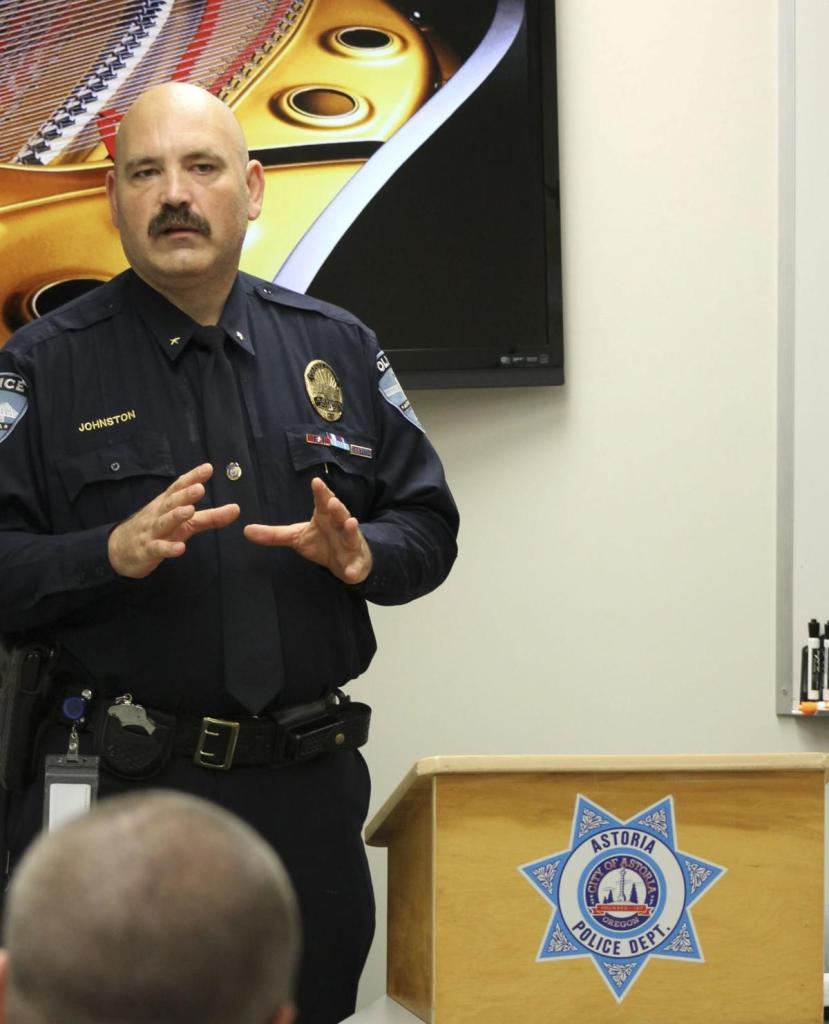
Medal of Honor awards Ceremony Astoria Police Department. Photo courtesy of the Daily Astorian

It started when I got promoted to Deputy Chief. I didn’t understand it at first. When I was a sergeant, no one called me Sarge, Sergeant, or any variation. Not unless I was at work and displaying my chevrons. Why was Deputy Chief different? It really bothered me, they weren’t calling me Deputy Chief, they were calling me Chief. That was a different person, he was my boss.

Yes, I wanted his job, but I didn’t have it and I felt like a usurper when people called me Chief. It was unsettling, like getting caught sitting in the bosses chair.

Then it happened. I became Chief. It wasn’t just the promotion. The weirdest side effect of the promotion was that I lost my first name. I’ve talked to other police chiefs about this it seems to be a fairly universal phenomena. You lose your first name and become Chief.

People I had known for decades stopped using my name and started using my title. In the end, the title went from being a title to a personal pronoun and then to a name. It has to be one of the weirdest things that ever happened to me. I lost my name, I mean how does one lose their name? How does an entire culture decide they are going to start calling you something else? It was literally my immediate family and my boss that called me Brad at that point. The rest of the world seemed to on a dime change their mind about what I would be called. It’s kind of hard not to let your job become your identity when your job steals your name.

So I left policing and I got my name back, just like that. I wasn’t Chief anymore I was Brad. It was kind of a relief. There is a lot of stuff that comes with that name, it was nice to set a bunch of it aside.

Then it happened again. I took a sales job. I walked in day one and the recruiter called me Chief. You see there were 3 Brads working there. The OG Brad got to keep his name the new guys got named Red and Chief, both for obvious reasons. Surprisingly, it was different this time. It was used as a nickname and there was no weight to it. Soon enough folks from my motorcycle groups picked it up and it stuck. Guys at stores and rallies yelling “Chief.” It appears I have a nickname now.

Its funny, its different then it was. It’s no longer subtractive, it’s additive,. People know me that way but it isn’t who I am. It’s an honor to be called it and not a burden. It doesn’t replace my name. I embrace it but don’t require it.

There have been some rubs, some of my native american students are uncomfortable with it till they know why it is there. Some chose to use it, not all do and that’s ok because it’s not my only name anymore, because of it I embrace it.

Eyes forward, positive attitude

Chief
WHAT’S THE DEAL WITH SOCIAL STUDIES

“Never doubt that a small group of thoughtful, committed people can change the world. Indeed, it is the only thing that ever has.” -Margaret Meade

Social Studies, History, Civics, Policy & Process, and Criminal Justice. Why wouldn’t you want to teach these? It is the building block of our future. How we plot our trajectory by looking at how we got here. We can’t change our society without understanding it, nor can we preserve it.

The US Army taught me how to hate. That may be an exaggeration, I was a pretty angry young man and probably would have learned how to hate more efficiently without them but man. Those Drill Instructors were good at teaching hate. I hated all things communist so much that I still hated them 30+ years after basic training.

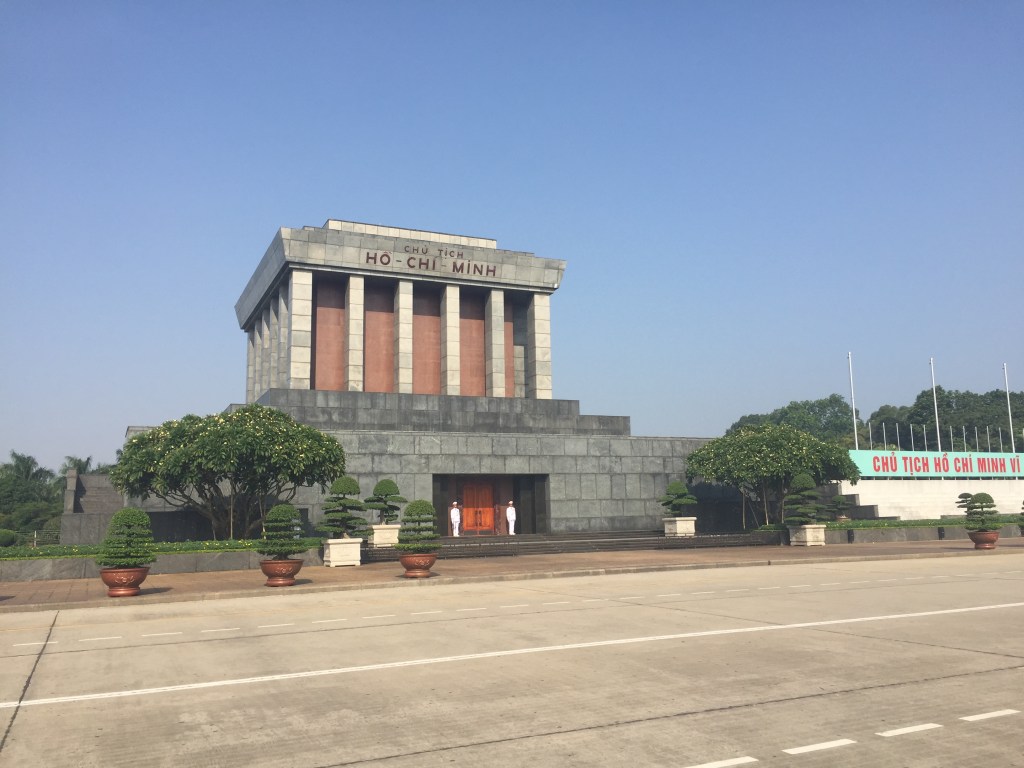
As part of my Masters in Public Administration coursework I went to Vietnam studying international public policy. I didn’t hate everyone when I got there, I felt very welcomed and found it to be a wonderful place. Then I visited the Ho Chi Minh Museum and the Vietnamese Military Museum. This is where it got me. These people, the North Vietnamese that I had been taught to hate had a different history and as a result, a different perspective. Their collectivist culture had a bearing to be sure but their totems were different too. Their reference points, their understanding and their pride were real, even though it conflicted directly with mine. It took me a while to understand all of this. To process it, to really get deep. I had to accept that I had been taught a false hate. It had its purpose, but it was not real.

Ho Chi Minh memorial and museum, Hanoi Vietnam

It helped go deep on my thoughts with Vietnam that I had already gone their on Civil Rights. The Netflix movie 13th brought it home after I had spent several days facilitating a police leadership class with a surprise student. A leader from one groups that is extremely active criticizing Portland Police Bureau was a student in the class. She helped me see that while we were saying the same words, we had very different meanings and that our reality as a result was very difficult. Proactive meant different things to both sides of the conversation. Professional did not have a shared meaning, it went on and on. Then, watching 13th and seeing the role that Police had within the black community such a short time ago, gave me pause. I had to rethink my thoughts on police minority relationships. Our past is prelude to our now and our future.

It took me 5 decades to come to this place. How do I not help others find it faster. How do I not help shape the future with knowledge of our past? It seems imperative. It seems important.

Social Studies to me is how its wired. How things have changed predicts how things will change. The world is a confusing place, making sense of the geopolitical, geographic, historical, and economic world is important. Here I will stand, making a difference in my corner of the world.

Eyes forward, positive attitude

Chief